
Pharr Residents Lead Commemoration and Municipal Park Improvements with Support from National Initiative
For the first time, a Texas-based project has been selected for Monument Lab's Re:Generation initiative, bringing the stories, struggles and visions of the Las Milpas neighborhood in Pharr, Texas onto the national stage. This recognition builds on years of community-led advocacy supported by Planet Texas 2050, the Pharr Youth Eco-Alliance and ARISE Adelante, a women-led organization serving more than 50 colonias across South Texas.
Monument Lab is a leading public art, history and design studio that collaborates with communities to document and celebrate local histories in public spaces. Through its Re:Generation program, supported by the Mellon Foundation, the organization backs ten projects each year nationwide with $100,000 per team.
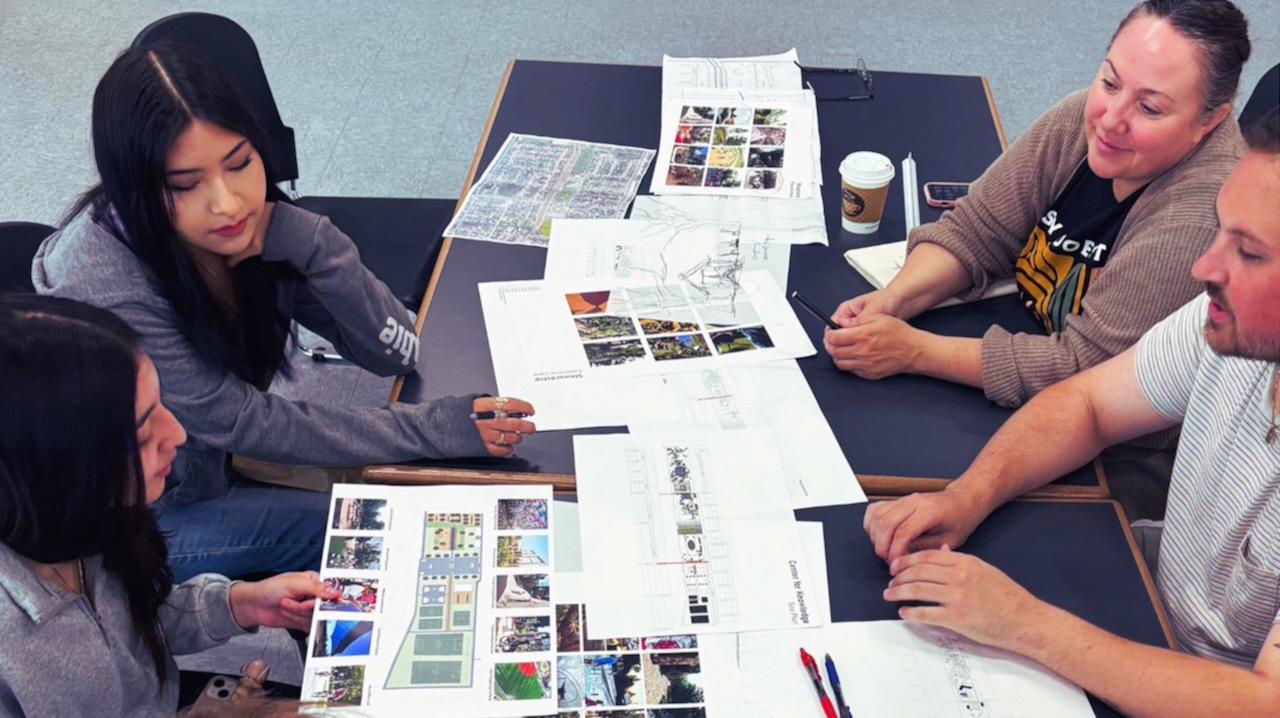
Over the past five years, PT2050's Frontline Community Partnerships for Climate Action team has worked alongside residents and local organizations to ensure that environmental planning and policy efforts reflect frontline community experiences. Led by Miriam Solis (School of Architecture), Carmen Valdez (The University of Texas San Antonio School of Public Health) and, more recently, Maggie Hansen (School of Architecture), the team’s work has advanced youth leadership, supported efforts to cultivate an evolving local narrative and developed a vision to improve a public space valued by Las Milpas families.
As part of the 2026 Re:Generation cohort, the team will develop a resident‑led commemoration rooted in South Pharr. The project will uplift stories of Las Milpas, support improvements to Jones Box Park, the city’s only municipal park, and invite neighbors into a broader conversation about civic memory and storytelling.
"It's such an honor to be the first project from Texas and to engage with other project leaders sharing stories from across the U.S. so we can learn from one another while honoring each community's priorities," Hansen said.
A Community's Struggle to Overcome Longstanding Challenges
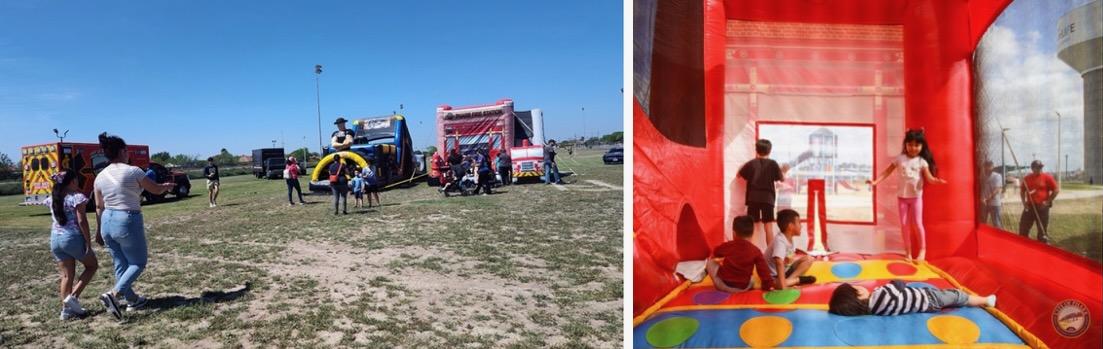
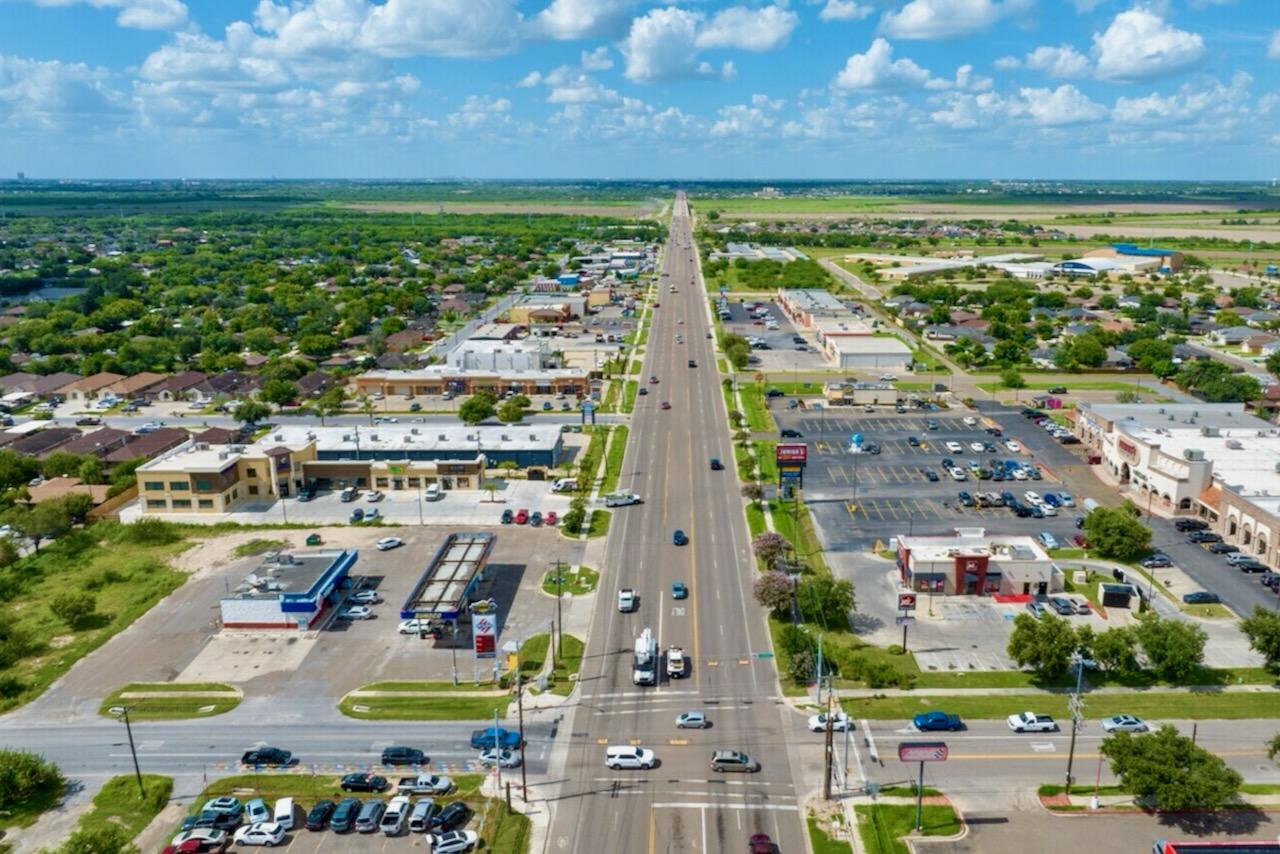
Las Milpas was founded in the 1960s by immigrant agricultural workers who settled on the rural, flood-prone land without basic services. Even after annexation by the City of Pharr in 1987, investments in drainage, lighting and other essential infrastructure lagged for years. Despite these challenges, families continued to build a strong, vibrant neighborhood, but one that has often been left out of broader discussions about the Rio Grande Valley.
Across the region, environmental narratives tend to focus on birding tourism or the rapid expansion of industry in the area. Yet these conversations rarely reflect the everyday experiences of Las Milpas residents and the generations before who cared for their land and worked to improve local conditions, support their neighbors and pass on community history through oral traditions, songs and Spanish-language records.
The Re:Generation project builds on this legacy, drawing on and documenting histories of farmworker organizing and local stewardship, celebrating community resilience and supporting a new generation of youth leaders — with ARISE Adelante at the center, a decades‑long partner that organizes families, coordinates public‑space improvements and ensures residents' voices shape neighborhood decisions.
Research, Youth Leadership and Community Collaboration
Over time, the UT team and Pharr collaborators created a model for community-driven research and design. Their approach emphasizes consensus-building, dialogue across generations and ongoing feedback from residents, including often-unheard youth perspectives.
In 2022, the Frontline project team recruited a coalition of local leaders from municipal departments, community‑based organizations and local schools to identify shared environmental health priorities in the Valley and suggest possible material improvements. Solis, who examines the planning, design and operation of urban infrastructure, led a planning practicum that highlighted youth-identified planning priorities in Pharr. This led researchers to partner with ARISE and the City of Pharr to launch the Pharr Youth Eco‑Alliance, a group of local 15 to 17-year-olds who documented key environmental concerns through participatory mapping, photovoice projects and conversations with city officials.
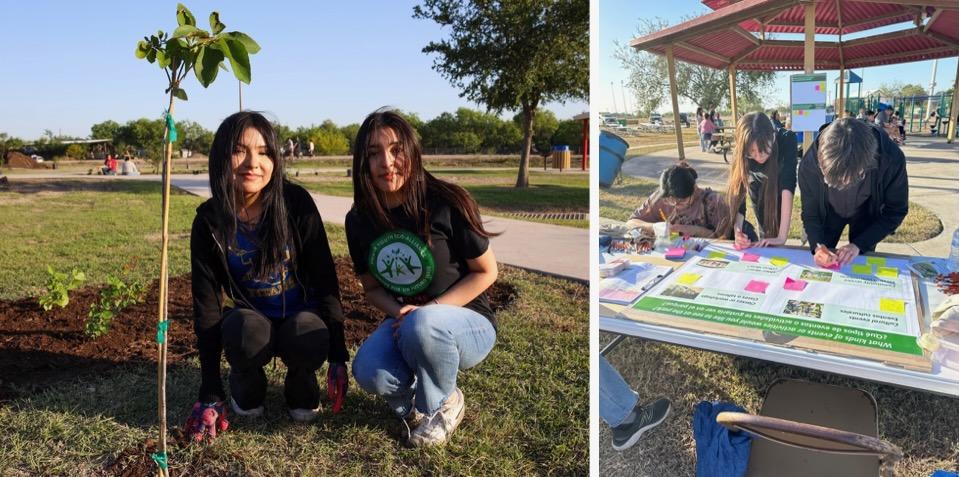
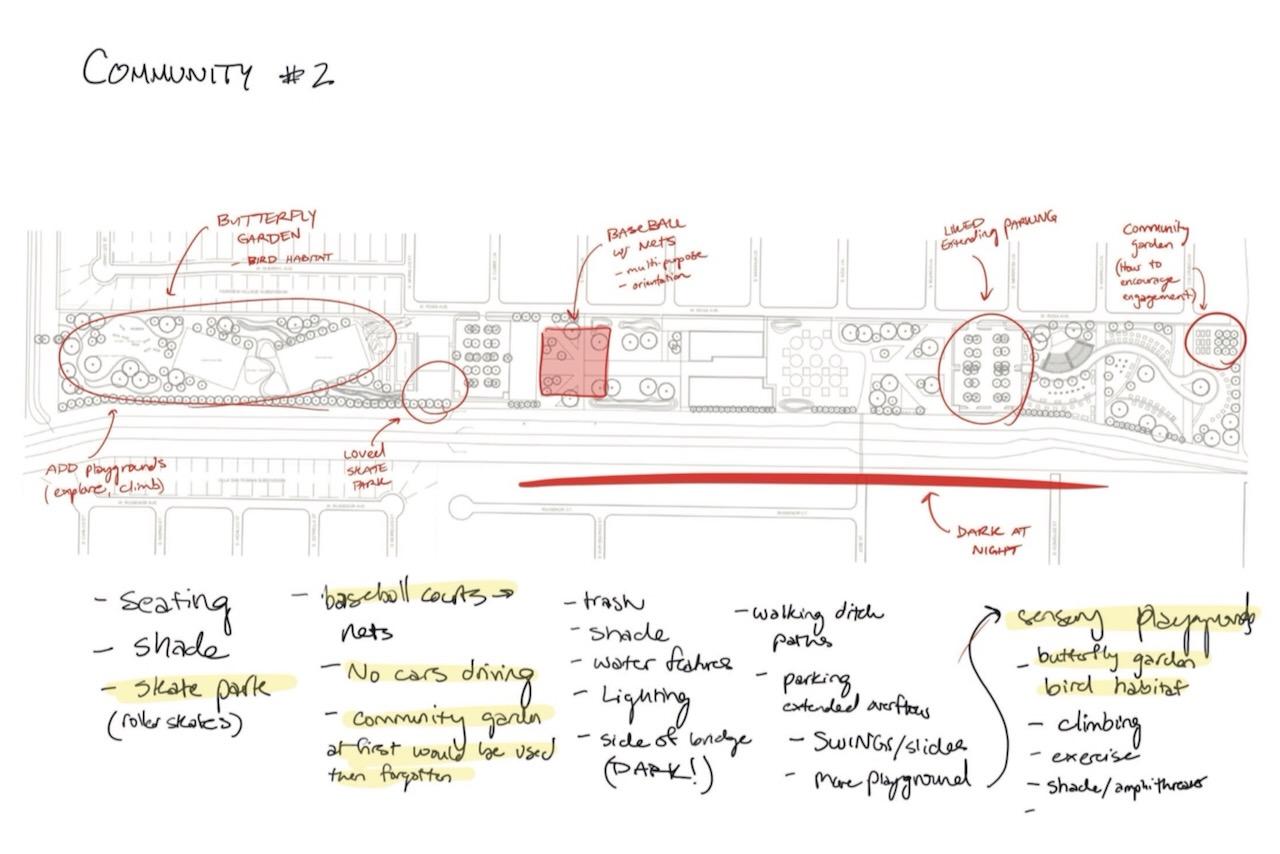
Their research identified Jones Box Park, a well-loved and active park, as a critical public space needing more shade, water access, stormwater management and intergenerational gathering areas and amenities. The team also hosted focus groups and discussions with local residents, community leaders and the City of Pharr to better understand the needs and future plans for the park.
ARISE director Lourdes Flores co‑leads community engagement and keeps the University's efforts aligned with ARISE's mission to empower Rio Grande Valley residents — especially women, children and youth — through education and active civic participation, bringing the community voice directly into decision-making and project design.
"My priority at ARISE is bringing opportunities to our young leaders," Flores said. "Working with UT Austin professors and students, I've watched our youth grow in leadership and self‑esteem. They feel they have much to share in improving Jones Box Park, and that they can contribute to the betterment of their neighborhoods, collaborate with city officials and share their ideas to support the development of green space around our communities."
Storytelling, Youth Engagement and a New Public Marker
The Re:Generation Project represents the next chapter, opening the doors to an even broader effort focused on amplifying community voices and sharing a lesser-known history with a wider audience. Grounded in a yearlong, locally led model, the project aligns with Monument Lab’s commitment to a richer, more complete picture of American history by bringing forward stories long overlooked, including Las Milpas' legacy of resident-driven land stewardship and collective care.
The Texas project selected by Monument Lab focuses on three connected efforts:
Oral Histories
The Frontline researchers and ARISE will work together to lead interviews with Las Milpas elders to document stories of organizing, mutual support and neighborhood change. UT graduate students will oversee the production of the digital archive to collect these histories and map their locations, making them accessible for future generations.
Youth Engagement
Young people play an active role in shaping the project and will be trained to use research tools — including mapping, collective walks and art-based storytelling — and create opportunities to interview elders and connect past and present community efforts. Youth will have clear roles, and adults are trained to support them. Decisions are collaborative, and youth input will support co-design of a public marker to commemorate local residents’ advocacy efforts.
A Public Marker in Jones Box Park
Pharr area youth will help to envision an appropriate marker that honors the neighborhood’s history and reflects their vision for the future in collaboration with the City of Pharr Parks and Recreation Department. A portion of Monument Lab funding will be used to realize the marker, by commissioning a local artist.
Translating Community Insight into Design
Hansen, who brings experience in professional practice and community-based design, will serve as project manager for the oral history archive and design of the marker. Initial ideas include multi-height water features that double as sculptures engraved with stories of Las Milpas, a symbol of both resilience and joyful gathering.
In early 2025, Hansen's advanced design studio course developed a plan for Jones Box Park based on the youth and community feedback collected throughout the years. The class spent a week onsite at the park, meeting with ARISE and Pharr Parks and Recreation and received preliminary design feedback from the Youth Eco-Alliance cohort who previously shared their experiences and insights with Frontline researchers.
In dialogue with community members and the City of Pharr leadership, the team is continuing to develop the design proposal and identify additional funding. The Re:Generation project builds on these relationships and offers new opportunities to understand the local history of environmental stewardship. The resulting archive exhibits and public art will be shared in local community centers, classrooms, city meetings and online, helping residents and young leaders understand how past advocacy shaped the neighborhood they know today.
"I’ve been part of this process for a few years, and the outcomes are all based on input from South Pharr students and the community," said Mari Caballero, Keep Pharr Beautiful chairwoman. "The entire project is a beautiful piece of art."